
A virtual agents in ai is a software based system that communicates with people through text or voice interfaces.
Unlike basic chatbots that rely on fixed scripts, virtual agents understand user intent, context, and language variations.
They act as digital assistants that can learn from interactions and improve responses over time. Users can ask questions in natural language and receive accurate, relevant answers without human intervention.
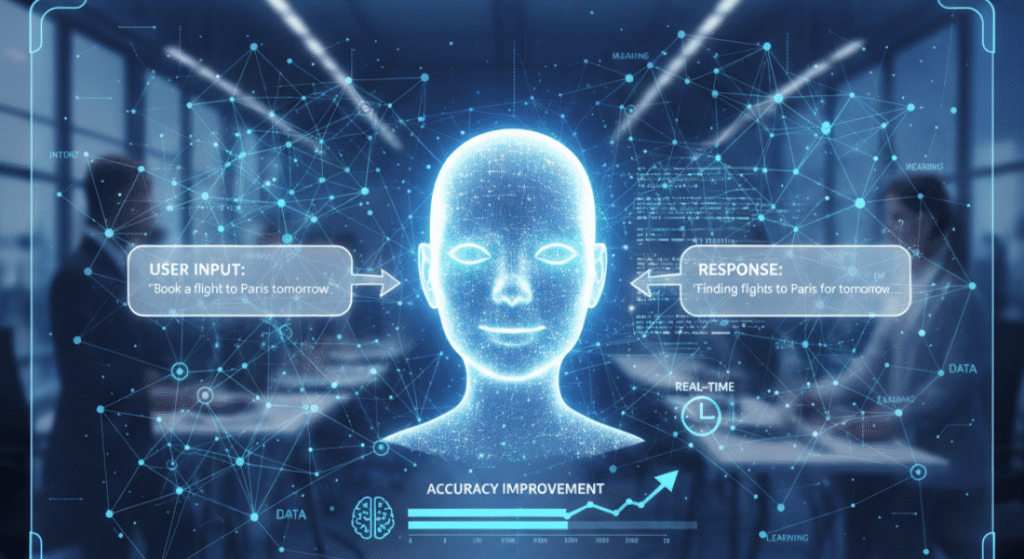
Virtual agents in ai work by analyzing user input through language processing systems that understand intent, context and meaning.
When a user asks a question, the system identifies what the user wants, checks relevant data or connected platforms and generates a clear, natural response in real time.
It also considers previous interactions to maintain conversation flow and improves accuracy over time by learning from user behavior and feedback, allowing it to deliver faster, more relevant and more personalized responses with continued use.
In simple terms, a virtual agent listens, understands and responds just like a human agent, but faster and available at all times.
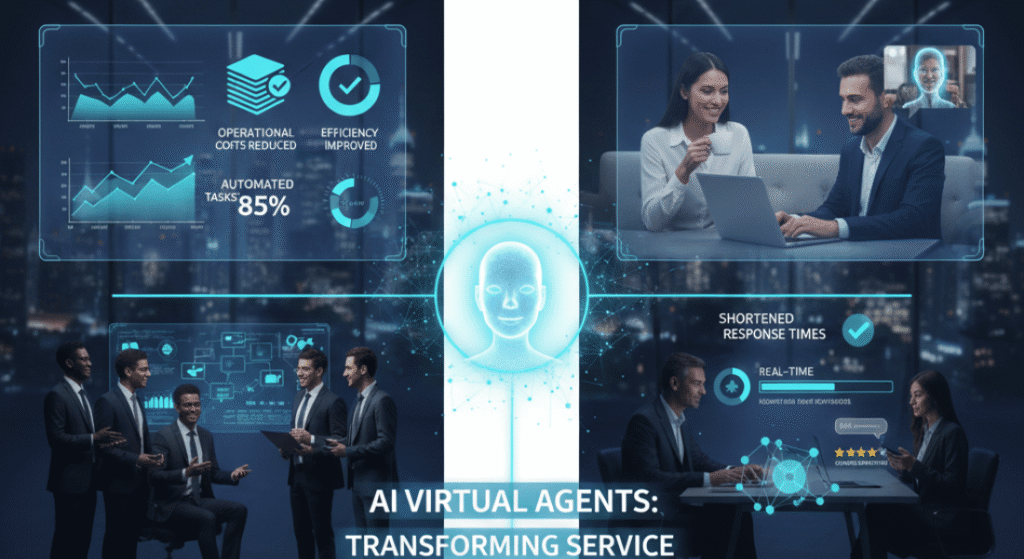
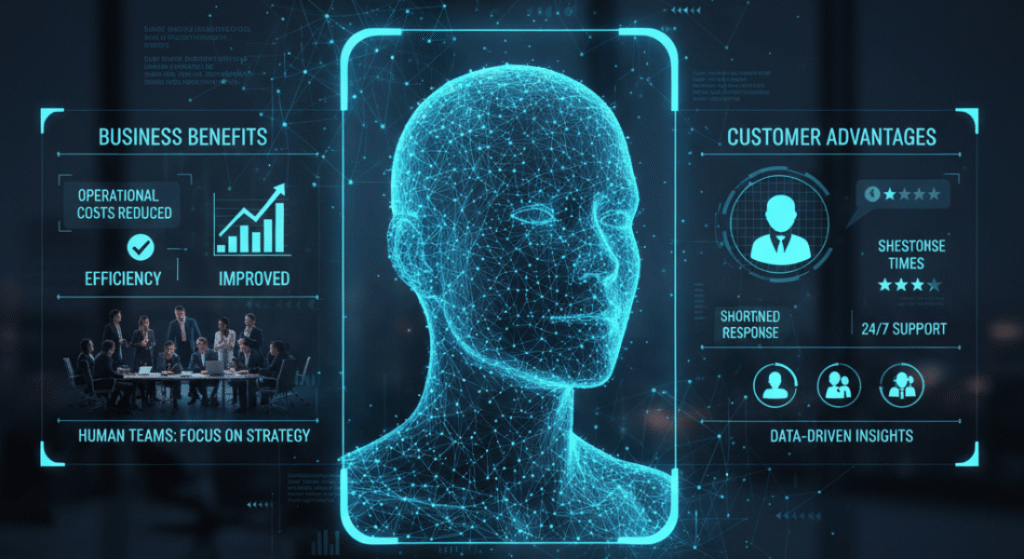
Virtual agents in ai provide measurable advantages for both businesses and customers by improving efficiency, reducing operational costs and enhancing overall service quality.
They handle high volumes of routine inquiries instantly, which shortens response times and increases customer satisfaction.
By automating repetitive tasks, virtual agents in ai allow human teams to focus on complex issues, strategic work and relationship building.
They operate 24/7, ensuring uninterrupted support and engagement across time zones. In addition, virtual agents in aicollect valuable interaction data that helps businesses identify customer needs, optimize processes and make better decisions.
Their ability to deliver consistent, accurate and personalized responses also strengthens brand trust and improves conversion rates over time.
They handle common questions instantly, such as:
This reduces wait times and improves customer satisfaction.
Virtual agents lower the need for large support teams and can reduce customer service costs by 30 to 50 percent, especially for high volume queries.
Unlike human agents, virtual agents in ai operate continuously, ensuring customers receive support at any time, regardless of location.
Every interaction generates data. Businesses can identify common issues, track user behavior and improve services based on real customer needs.
Virtual agents in ai use previous interactions to provide personalized responses, product suggestions and guidance, increasing engagement and conversions.
An eCommerce business implemented a virtual agent to handle order tracking and return requests.
Results after 60 days:
This shows how virtual agents in ai improve efficiency without compromising user experience.
A chatbot follows predefined scripts. A virtual agent understands intent, adapts responses and performs actions, making it more flexible and intelligent.
Yes. Many virtual agents support voice recognition and speech to text, making them suitable for call centers and smart devices.
When properly implemented, virtual agents use encryption, authentication and compliance standards such as GDPR to protect user data.
No. They handle repetitive tasks, allowing human teams to focus on complex issues, strategy and customer relationships.
E-commerce, banking, healthcare, travel, telecom, SaaS and customer service driven industries benefit the most.
Many users search using natural questions like:
To rank well in voice search:
Example voice friendly phrasing:
Virtual agents help businesses respond faster and provide support without increasing costs.
This aligns with Google’s Core Updates, which prioritize helpful, clear and user focused content.
Despite their benefits, virtual agents also present challenges.
They must connect smoothly with existing systems such as CRM, ERP and support tools.
Virtual agents require regular updates and training to handle new queries correctly.
Some users prefer human interaction, so businesses must offer a smooth handoff to live agents when needed.
Handling personal data requires transparent policies and compliance with privacy regulations.

Choose the right virtual agent solution by clearly defining your business use case, evaluating AI and NLP capabilities and ensuring seamless integration with existing systems.
Look for scalability, multichannel support, strong security, customization options and detailed analytics. A reliable vendor with proven expertise ensures long term value, improved efficiency and an enhanced customer experience.
Choosing the right solution ensures long term success and better ROI.
Virtual agents are transforming how businesses communicate, support customers and manage operations.
By automating repetitive tasks and delivering fast, personalized responses, they improve efficiency and reduce costs.
Successful implementation requires proper setup, continuous training and a balance between automation and human support.
As technology advances, virtual agents will become even more intelligent, intuitive and essential for competitive businesses.
For organizations looking to scale efficiently and meet modern customer expectations, adopting virtual agents is no longer optional it is a strategic necessity.