Retail businesses today face intense competition and rising customer expectations. Shoppers demand instant responses, personalized experiences, and seamless interactions across channels.
Traditional retail systems often struggle to keep up with these demands, leading to missed opportunities and lost sales. This is where AI-powered automation is transforming the retail landscape.
In this article, we will explore what retail ai chatbot means, its importance, benefits, challenges, and practical applications, and how Tecrix.org helps businesses leverage it effectively.
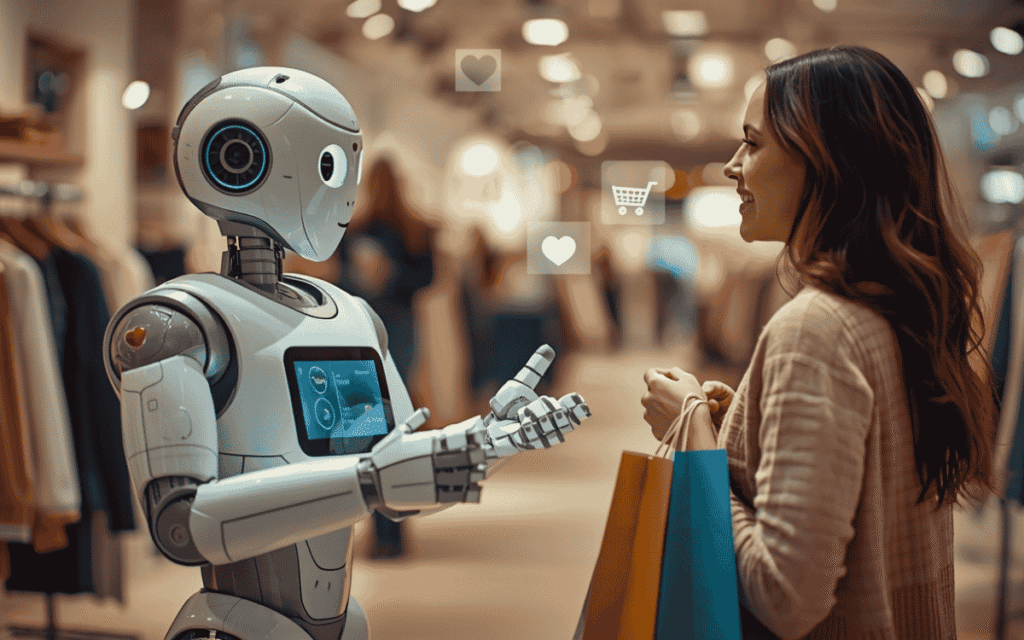
A retail ai chatbot is an intelligent virtual assistant designed specifically for retail businesses to automate customer interactions, recommend products, and streamline shopping experiences. By leveraging AI technologies, a retail ai chatbot can understand user intent, provide real-time assistance, and enhance customer satisfaction across multiple touchpoints.
Modern consumers expect quick and accurate responses. A retail ai chatbot helps businesses meet these expectations by offering instant support and personalized recommendations. By implementing a retail ai chatbot, retailers can reduce operational costs, improve engagement, and increase conversions, making it a critical tool for growth.
A retail ai chatbot analyzes user behavior and preferences to suggest relevant products, improving sales opportunities.
Retail ai chatbot solutions work across websites, mobile apps, and messaging platforms, ensuring consistent experiences.
Customers receive instant answers, reducing wait times and improving satisfaction.
With a Retail AI API, businesses can connect chatbots to inventory systems, CRMs, and payment gateways.
Retailers use a retail ai chatbot to handle FAQs, order tracking, and returns efficiently.
A retail ai chatbot acts as a retail AI agent, guiding customers through product discovery and recommendations.
Retail ai chatbot solutions engage visitors and convert them into paying customers through intelligent conversations.
An AI call agent free solution can handle voice-based queries, expanding customer interaction channels.
Many businesses explore retail ai chatbot free tools to get started with automation. Options like Retell AI and other platforms offer basic capabilities for experimentation. However, for scalable and high-performance solutions, businesses often require advanced customization beyond retail ai chatbot apk or basic retail ai chatbot login systems.
When evaluating tools, businesses often look at solutions like Retell AI free alternative options to find the right balance between cost and functionality. A robust retail ai chatbot should offer scalability, integration capabilities, and advanced AI features rather than just basic automation.
A retail ai chatbot provides significant advantages for businesses aiming to scale efficiently. It reduces customer service costs, increases sales conversions, and enhances user engagement. By implementing a retail ai chatbot, businesses gain a competitive advantage through faster response times and personalized interactions.
While retail ai chatbot solutions offer numerous benefits, businesses may face challenges such as integration complexity, data management, and maintaining conversational accuracy. With expert guidance and continuous optimization, these challenges can be effectively addressed to ensure long-term success.
Selecting the right retail ai chatbot requires evaluating business needs, scalability, integration capabilities, and customization options. A well-chosen retail ai chatbot ensures seamless automation, improved customer experience, and higher ROI.
A retail ai chatbot is no longer a luxury—it is a necessity for businesses looking to thrive in a competitive retail environment. By leveraging the right strategy and technology, companies can enhance customer experiences, boost sales, and achieve sustainable growth.
Leading AI chatbots include ChatGPT, Google Gemini, Microsoft Copilot, Claude AI, and Meta AI for advanced conversational tasks.
A retail chatbot is used in online stores like Shopify bots that help customers track orders, find products, and get support instantly.
AI can automate customer service, manage inventory, personalize recommendations, and improve sales forecasting in retail stores.
No, AI chatbots are legal, but they must be used ethically and not for spam, fraud, or harmful activities.
The 30% rule suggests AI can automate around 30% of repetitive tasks, while humans handle complex decisions.
The four types are Reactive Machines, Limited Memory, Theory of Mind, and Self-Aware AI systems.